Pooling Academy’s governance courses help governing body members learn about their roles and responsibilities and guide the teams that support governing bodies to meet governance needs and expectations. Learn about pool governance models and methodologies, key fiduciary obligations, and the important role of governing body members within a pool. Through insight from pooling experts and interactive real-world pooling exercises, you’ll gain practical strategies and practices your pool can implement.

Pooling Basics: Governance Overview
The legal structure of a public entity pool and the makeup of its governing body – whether referred to as directors or trustees – will dictate how a pool conducts its work. Pools have a number of foundational documents that shape their governance and operations; these documents help to ensure effective governance and influence the culture of the organization. In this two-part course, learners will examine the importance of clear, specific governing documents and the distinct roles of governance.

Pooling Basics: Governance Roles and Responsibilities
Pools operate as extensions of their member entities, which means pool members have a great degree of input and influence into key pool decisions. This influence extends through the governing body and governance decisions made by a pool.
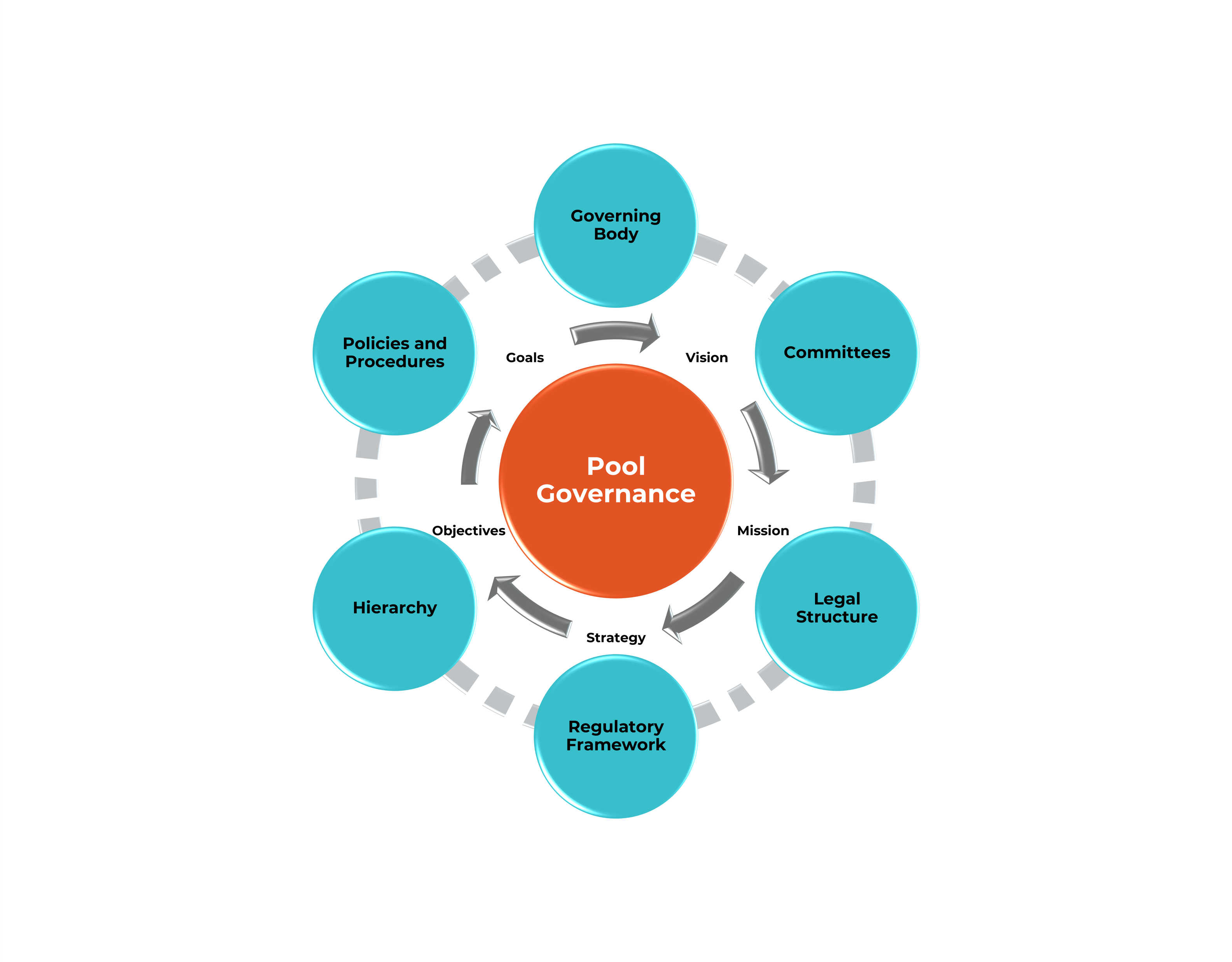
Governance Modes and Models
This course defines and explains three modes of governance used by all governing bodies and gives examples of how the modes apply within a pool’s governing environment. The course also provides an overview of structured governance models and typical pool governance approaches, describing their influence in practical terms.

Roles and Expectations of a Pool Governing Body Member
This course teaches the importance of written governance role expectations and what is typically expected from pool governing body members. Learners will explore ways to assess governance performance, common officer roles and responsibilities, and how a pool’s executive committee may function. Finally, learners will receive tips for recruiting, selecting, onboarding and planning for the succession of governing body members.

Fiduciary Obligations in Pool Governance
This course teaches learners to effectively apply fiduciary principles in real-world pooling scenarios, helping them engage in responsible governance. Learners will be introduced to the legal and ethical aspects of fiduciary duty, emphasizing the importance of maintaining trust and accountability. Lastly, this course covers the importance of regular fiduciary training, the role of a pool’s general legal counsel in providing fiduciary guidance, and key pool practices for governing bodies to manage and monitor in order to fulfill their fiduciary obligations.